Healing Beyond Medicine: How Physiotherapy Speeds Recovery After Surgery & Stroke
Physiotherapy is a science-based approach that helps restore movement and physical function when any part of the body is affected by injury, illness, or disability. Physiotherapy encompasses various techniques like exercise, massage, heat therapy and education to improve mobility, reduce pain and support recovery without the inclusion of medication or surgery. Physiotherapy helps restore strength, flexibility, and joint function. I also improve balance, coordination and mobility. Physiotherapy often also includes breathing exercises to improve lung function and enhance circulation.
Whether it is injury, chronic stiffness or simply the need to keep the body working at its best, physiotherapy is very beneficial. It is ideal for:
- Musculoskeletal Issues, like back pain, arthritis, sprains, and sports injuries.
- Neurological conditions like stroke, parkinson’s disease, and multiple sclerosis.
- Cardiovascular and respiratory recovery post-heart attack.
Post-Surgical Rehabilitation:
Benefits of Post-Surgical Physiotherapy
- Reduces pain naturally with techniques like ice/heat therapy, massage and electrical stimulation to ease pain.
- Speeds up healing with gentle, guided movements which improve blood flow, deliver oxygen and nutrients to tissues, thereby accelerating the reduction of swelling and repairing the injured or incapacitated tissues.
- Restores strength and flexibility: Surgery often leads to muscle weakness (muscles are cut to reach the surgical site) and joint stiffness due to inactivity. It rebuilds strength and range of motion through targeted exercises.
- Prevents complications: Physiotherapy provides regular movement, which lowers the risk of blood clots, scar tissue buildup and lung issues, especially after chest or abdominal surgeries.
- Boosts confidence and independence: Mind over matter is very true of the human body. Regaining mobility helps patients feel confident and more in control, leading to improved mental well-being and a better quality of life during recovery.
Benefits of Physiotherapy After a Stroke
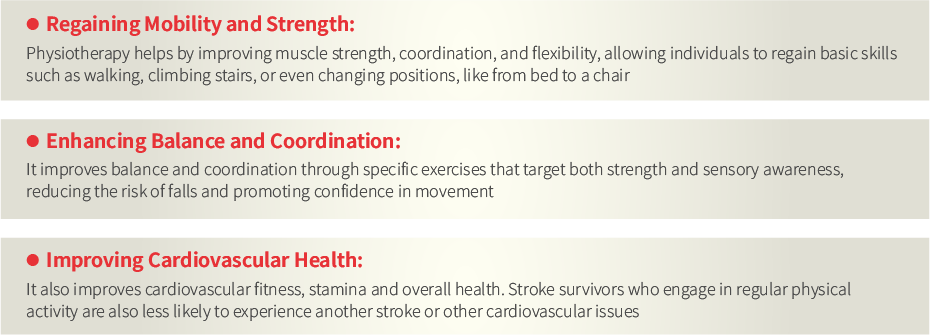
A stroke can drastically change one’s life in an instant, and the road to recovery can seem long and uncertain. Physical therapy is the cornerstone of stroke recovery — helping survivors rebuild mobility, strength, coordination and confidence. Whether it is retraining your gait, regaining arm function or restoring balance, physiotherapy offers a structured path toward reclaiming everyday independence, improved mobility, and strength.
Some Common Physiotherapy Procedures:
Physical therapy is an ever-evolving profession that adjusts to new research on a regular basis. Physical therapy was formerly thought to be only useful for the elderly, those recovering from surgery, or those with severe musculoskeletal problems. It has evolved to treat a wide range of musculoskeletal ailments and is even used to prevent pain and injury. Physiotherapy is suggested for a person who is affected by an injury, sickness, or disability, but everyone can benefit from today's sophisticated approach to physical therapy, from office workers to elite athletes.
- Range of Motion (ROM) Exercises: Muscle atrophy and accompanying postural difficulties can be avoided by moving the affected joints and muscles often. Physiotherapists recommend a range of motion exercises to help with movement, joint mobility, and circulation. Patients can benefit from ROM exercises to increase their flexibility and independence.
- Soft Tissue Mobilisation: This is a perfect treatment for pain associated with athletic injuries and can help the patient's muscles relax by decreasing the swelling in the affected regions. This massage also aids in the circulation of blood and lymph fluid. Massage is one of the most used manual therapies, allowing physiotherapists to manipulate muscles and tissue, enhancing blood flow and mobility.
- Electrotherapy: A recent advancement in the field of energy-based physiotherapy, this stimulation is performed by attaching electrodes to the skin while performing this treatment. These electrodes produce muscle shortening, which helps to avoid atrophy. It is best for people who have paralysis or a limited range of motion. Electrotherapy can be combined with laser and ultrasound therapy to achieve the best results.
- Cryotherapy and Heat Therapy: If a patient complains of muscle tightness anywhere on their body, applying heat or ice to the irritated areas may be therapeutic. The use of heated packs or even paraffin wax can be used in heat therapy. Cryotherapy may include the use of an ice pack or an ice massage.
- Hydrotherapy: Water-based movements and exercises can help gain mobility without putting too much strain on the joints. Hydrotherapy is also effective for performing balance exercises for people with cerebral palsy or other diseases that can cause imbalance.
- Acupuncture and Dry Needling: These ancient healing methods have been demonstrated to help with pain relief and recuperation. The purpose of acupuncture is to restore energy throughout the body by inserting needles along the meridian lines. The purpose of dry needling is to relieve pain by inserting needles into trigger points. Both function by inserting extremely fine needles into certain body locations. Acupuncture and dry needling are not available to all physiotherapists since they both require higher training.
- Icing: Icing is to help with the healing and recovery process by reducing inflammation. You must follow your physiotherapist's advice, especially at home.
- Kinesio Taping: Kinesio tape is a terrific approach to stabilise the joints and muscles while the patient is undergoing therapy. It can be placed directly on the skin. Furthermore, the tape is flexible and does not interfere with a range of motion exercises, like stretching and flexing muscles.
- Therapeutic Ultrasound: Though not really physiotherapy, therapists have used beams to target injured tissue. The ultrasound sound waves stimulate the ligaments, tendons and fascia, similar to a small massage. Patients with arthritis or tendonitis and muscle tension can benefit from this treatment.
- Transcutaneous Electrical Nerve Stimulation (TENS): When you experience chronic or severe pain, a TENS device can help you feel better. It works by transmitting electrical impulses to your nervous system via adhesive pads affixed to your body. These electrical impulses also increase the production of endorphins, which are natural pain relievers.
- Movement and Exercise: The physiotherapist will suggest certain motions and exercises depending on the nature and recovery of the injury. Regular exercise can help you move more freely, and the physiotherapist can assist with finding the correct aids to help movement, such as crutches or a walker.
Final Thoughts
Physiotherapy speeds recovery and supports holistic healing after surgery or stroke. Remedial exercises are meant to help you strengthen the areas of your body that require it. Before home workouts, you will have to practice these exercises under the supervision of the physiotherapist. There are many physiotherapy centres in Hyderabad, but it is a good option to connect with the best multispeciality hospital in case of emergencies. The physiotherapy department at STAR Hospitals in Hyderabad is patient-centric to help patients regain movement, manage pain, and recover after injury, surgery, or chronic conditions with confidence. Their expert team designs personalised rehab plans using advanced techniques like joint mobilisation, electrical stimulation, and activity modification. Specialised —orthopaedic, neurological, cardiac, and women’s healthcare streams ensure focused care for every recovery journey.
Comments
Post a Comment